My Heroku Deployment Checklist for Flask and Node Projects
Posted on
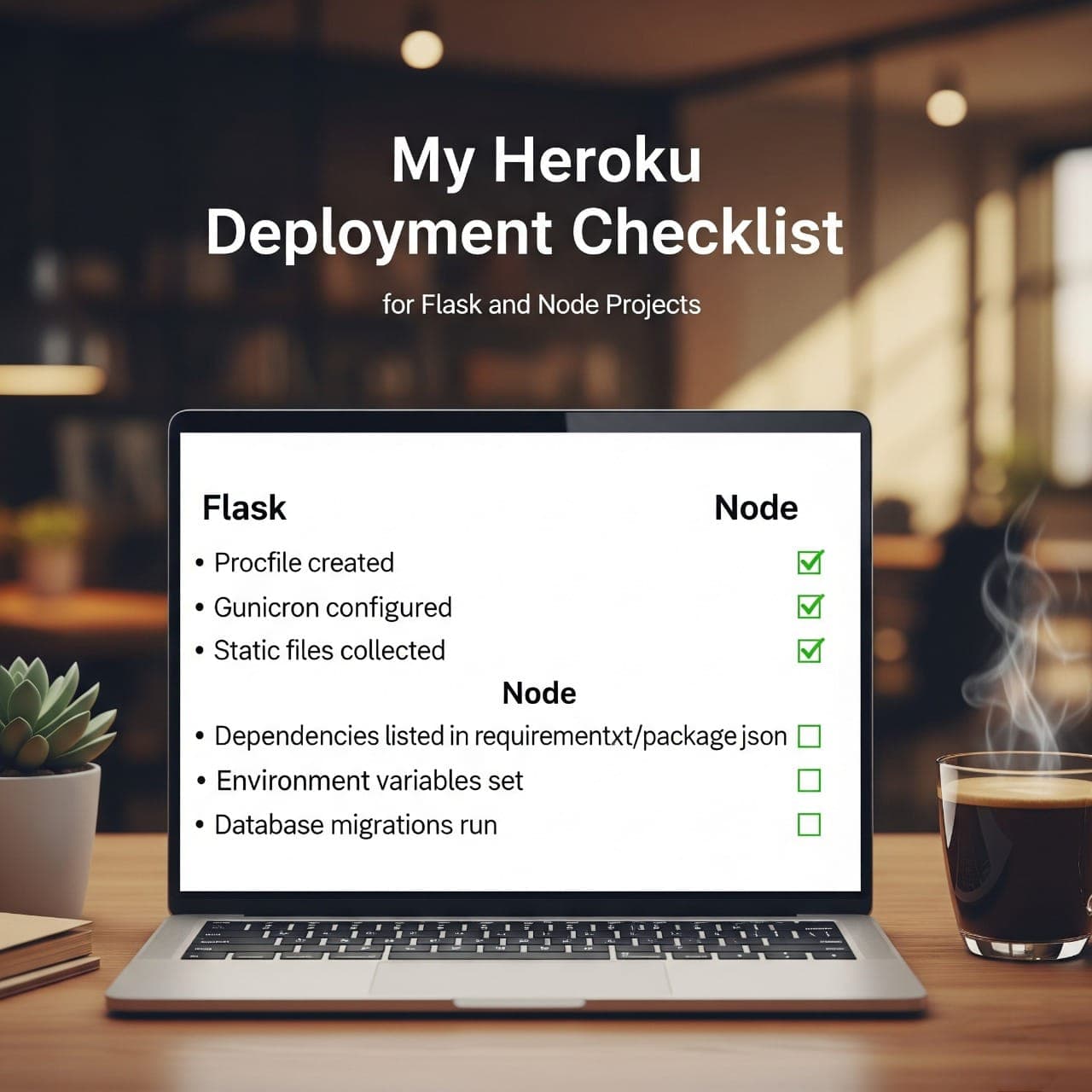
Fast, clean, and reliable. Here’s my personal deployment checklist when pushing fullstack projects to Heroku.
Heroku remains one of the fastest ways to move fullstack code into production. My deployment checklist ensures this process is fast and rock-solid. For Flask apps, I use Gunicorn with proper worker settings, configure a Procfile, and set environment variables via heroku config:set. I install psycopg2 carefully and provision Heroku Postgres for persistence. For Node.js apps, I include build scripts in package.json, set a clear start command, and leverage environment-based configuration. I often add a .slugignore or .slugignore entry to reduce bundle size, and I apply best practices like NODE_ENV=production, logging verbosity control, and process monitoring via Heroku logs. Locally, I validate using heroku local or foreman to mirror production behavior. I run automated tests via GitHub Actions that build deploy-preview branches, run unit tests, and optionally deploy staging instances. Once deployed, I configure automated health checks, webhook endpoints, and scheduled backups. If downtime is unacceptable, I ensure that custom domains use SSL, configure build-time environment variables, and enable autoscaling where needed. This checklist isn’t just ops—it’s a mechanism to preserve developer velocity. It ensures you deploy consistently, catch config mismatches early, and maintain system resilience. Production-grade shipping without friction is strategic code execution.