Next.js vs CRA in 2025: Why I Never Start With Create React App Anymore
Posted on
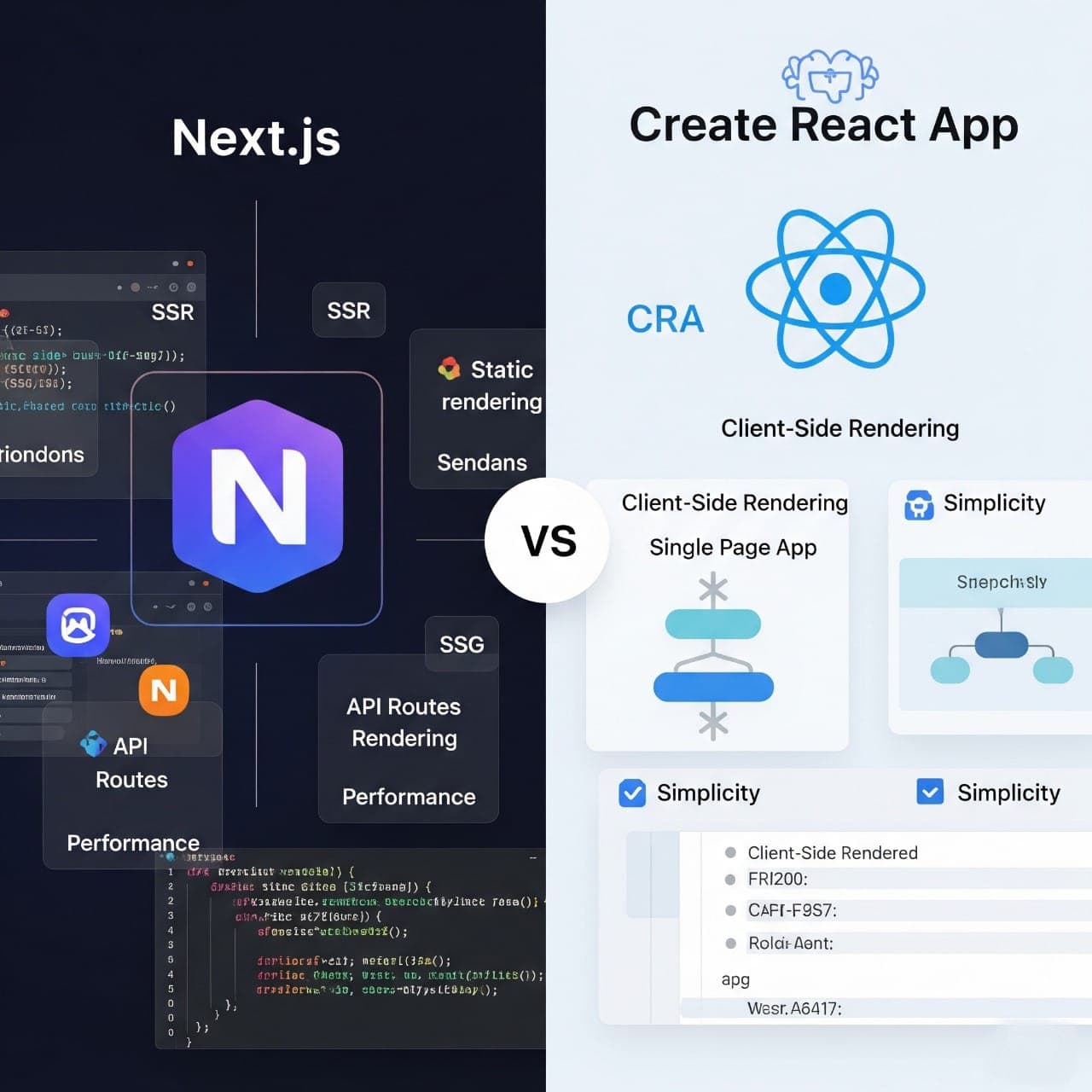
Create React App had its time. But in 2025, Next.js is the clear choice for modern frontend development. Here’s why.
Create React App once simplified project setup—but today Next.js is the obvious choice for serious frontend development. CRA leaves you manually wiring routing, server-side rendering, API endpoints, and optimization. With Next.js, file-based routing, incremental static regeneration (ISR), API routes, and SEO tools are available from day one. Next.js accelerates delivery without compromising performance. Out of the box, you get SSR, optimized code splitting, type-safe data fetching with React Query, and built-in support for edge deployment via Vercel or Cloudflare’s edge. You avoid ejected configs, custom build setups, and performance pitfalls that plague CRA apps when they scale. Even if your app doesn't need SSR, Next.js still wins: static generation, image optimization, and hybrid rendering modes give you flexibility. When you're building a side project or pitch demo, it feels more complete and polished by default. Another advantage is integrated API routes. For minor backend logic—like contact forms or webhook handlers—you don’t need a separate server. This simplifies deployment and reduces friction. Choosing Next.js aligns with strategy: prioritize shipping product-fast, avoid tooling drift, and scale architecture cleanly. CRA might suffice for learning or toy projects, but for professional tooling and long-term maintenance, Next.js is designer-grade infrastructure that stays clean under pressure.