PostgreSQL vs SQLite: Choosing the Right Tool for the Right Job
Posted on
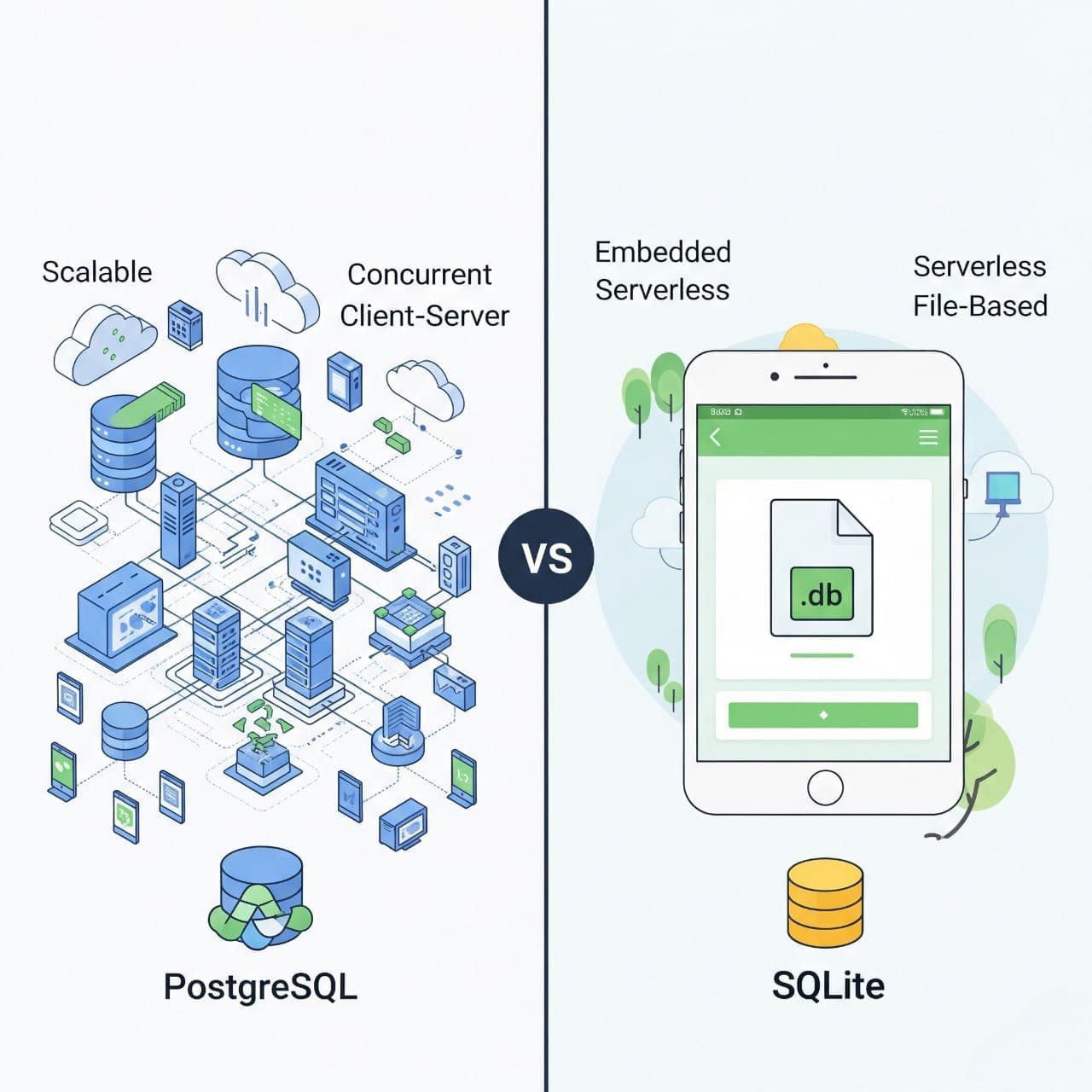
Both are powerful relational databases—but their use cases differ dramatically. Here’s how I choose between them.
SQLite and PostgreSQL may share SQL syntax, but their strengths diverge dramatically. SQLite is embedded, zero-configuration, and ideal for local tools, prototypes, or CLI utilities. PostgreSQL, meanwhile, offers advanced relational capabilities, concurrency control, indexing, and scalability. For small scripts, Python-based dashboards, or experimental tools where you don’t want to deploy infrastructure, SQLite is my go‑to. It's fast to start, easy to version control, and reliable. There's no need to spin up a server—your data follows the file, versioned like code. In production applications, however, PostgreSQL is the standard. It supports complex joins, full-text indexing, JSONB data, and high concurrency. I deploy it using Heroku Postgres or managed providers. When paired with PostGIS, logical replication, and backup mechanisms, PostgreSQL becomes enterprise-grade data infrastructure. Selecting between them is pragmatic: if the only requirement is a lightweight sandbox or one-off export, use SQLite. If you're handling multi-user access, scaling volumes, or data integrity, default to PostgreSQL. Recognizing this tradeoff keeps your stack lean when possible, robust when needed.