React Query vs Redux Toolkit: When to Choose What in 2025
Posted on
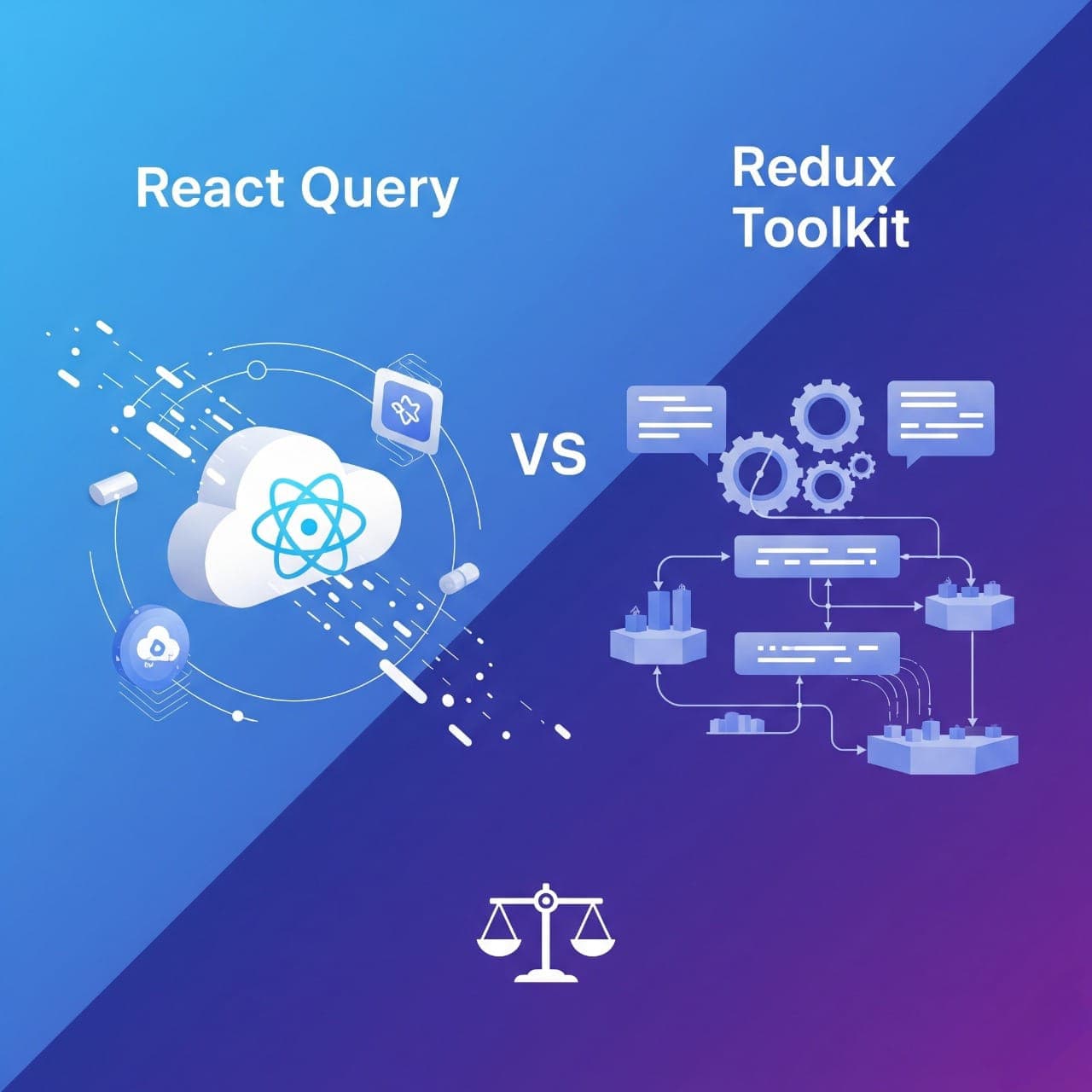
Understand the real tradeoffs between Redux Toolkit and React Query — and how to choose the right tool for your frontend data strategy.
Redux Toolkit and React Query often appear interchangeable to many developers, yet they address fundamentally different types of state. Redux Toolkit excels at managing global, client-driven state—things like modal visibility, feature flags, and UI state. React Query is engineered for server state: caching, background synchronization, retry logic, and stale-data handling. Conflating the two leads to unnecessary complexity, brittle code, and poorer developer experience. In my stack, React Query is the default for anything involving remote data. It abstracts away fetch, caching, and invalidation—giving you declarative data loading with minimal boilerplate. Instant cache hydration, refetch-on-window-focus, and mutation APIs mean I never write retry logic manually again. This allows me to focus on business logic instead of plumbing. Redux Toolkit remains invaluable for managing normalized local state, cross-component coordination, and scenarios where you need controlled mutations. I use RTK Query sparingly—only when I want Redux-style APIs over fetches. But if there’s no need for global dispatches, I default to React Query. This separation of role improves clarity and maintainability. It reduces bundle size, prevents overfetching, and aligns with the server/client state distinction. It also forces intentional architecture: server state lives in React Query, client-only state lives in Redux Toolkit or React Context. This approach keeps your UI performant, predictable, and easy to refactor—consistency that matters at scale. By sticking to this model, I build frontend applications that stay fast, predictable, and clean. Even as teams grow or projects mature, you avoid the trap of consolidating all logic into Redux—reducing boilerplate, increasing clarity, and improving long-term velocity.